

Harmonic Spectral Electrolysis Technology
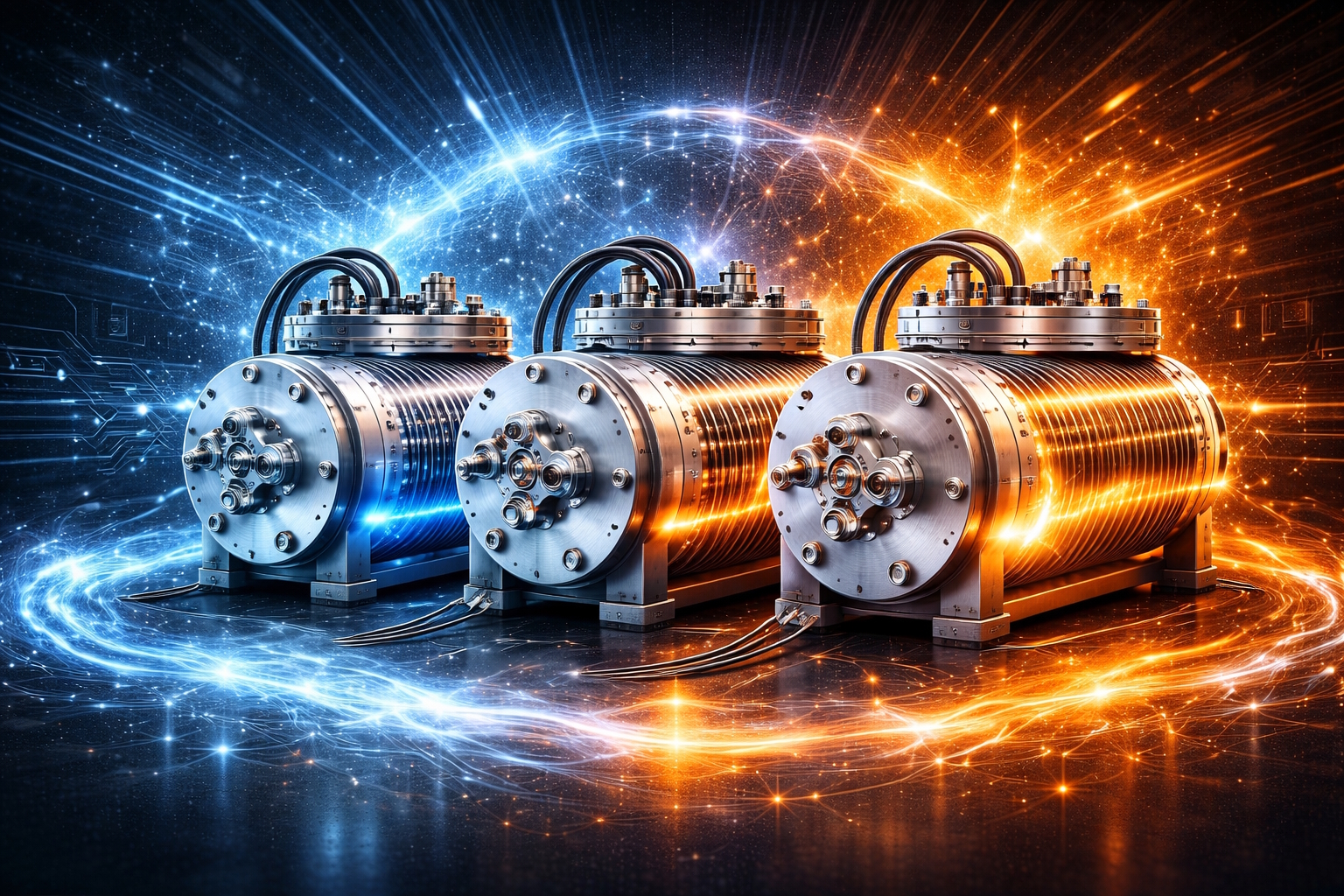
E-TEAS® represents a technological evolution in the field of advanced electrolysis, based on Harmonic Spectral Electrolysis Technology (TEAS®). The system integrates high-precision electrochemical processes with dynamic, modulated control of the electric fields within the cells, with the aim of improving operational stability, energy efficiency, and process repeatability.
Operating Principle
The splitting of water into hydrogen and oxygen occurs through the application of a potential difference between electrodes immersed in an electrolytic medium. Under natural conditions, water is subject to the phenomenon of self-dissociation, through which a small fraction of molecules spontaneously separates into H⁺ and OH⁻ ions in dynamic equilibrium.
Electrolysis acts upon this equilibrium by supplying electrical energy to drive and amplify the ionic separation processes and the associated electrode reactions.
In the E-TEAS® system, the process is supported by harmonic and modulated control of the electric fields, designed to selectively influence:
- the local distribution of charges,
- ionic mobility within the medium,
- the stability of the electrode–electrolyte interfaces,
- the dynamics of electrode processes during dissociation.
The system employs:
- High-surface-area multi-plate electrodes, to maximize the reaction area.
- Modulated electrical power supply with harmonic spectral components, for controlled field distribution.
- Real-time monitoring of operational parameters, for continuous optimization of the operating point.
The Role of the T.L. (Technical Liquid)
Unlike traditional systems that use H₂O exclusively as the electrolytic medium, E-TEAS® technology employs a specially formulated T.L. (Technical Liquid).
The T.L. is designed to:
- optimize conductivity and ionic stability,
- enhance the response to modulated electric fields,
- ensure repeatable and controlled operating conditions,
- promote more efficient interaction between self-dissociation phenomena and ionic transport.
The use of the T.L. allows operation in a more controllable electrochemical regime compared to unstructured water, improving the management of molecular dynamics and dissociation processes under an electric field.
Integration with L-CPC-TEAS®: towards a new paradigm
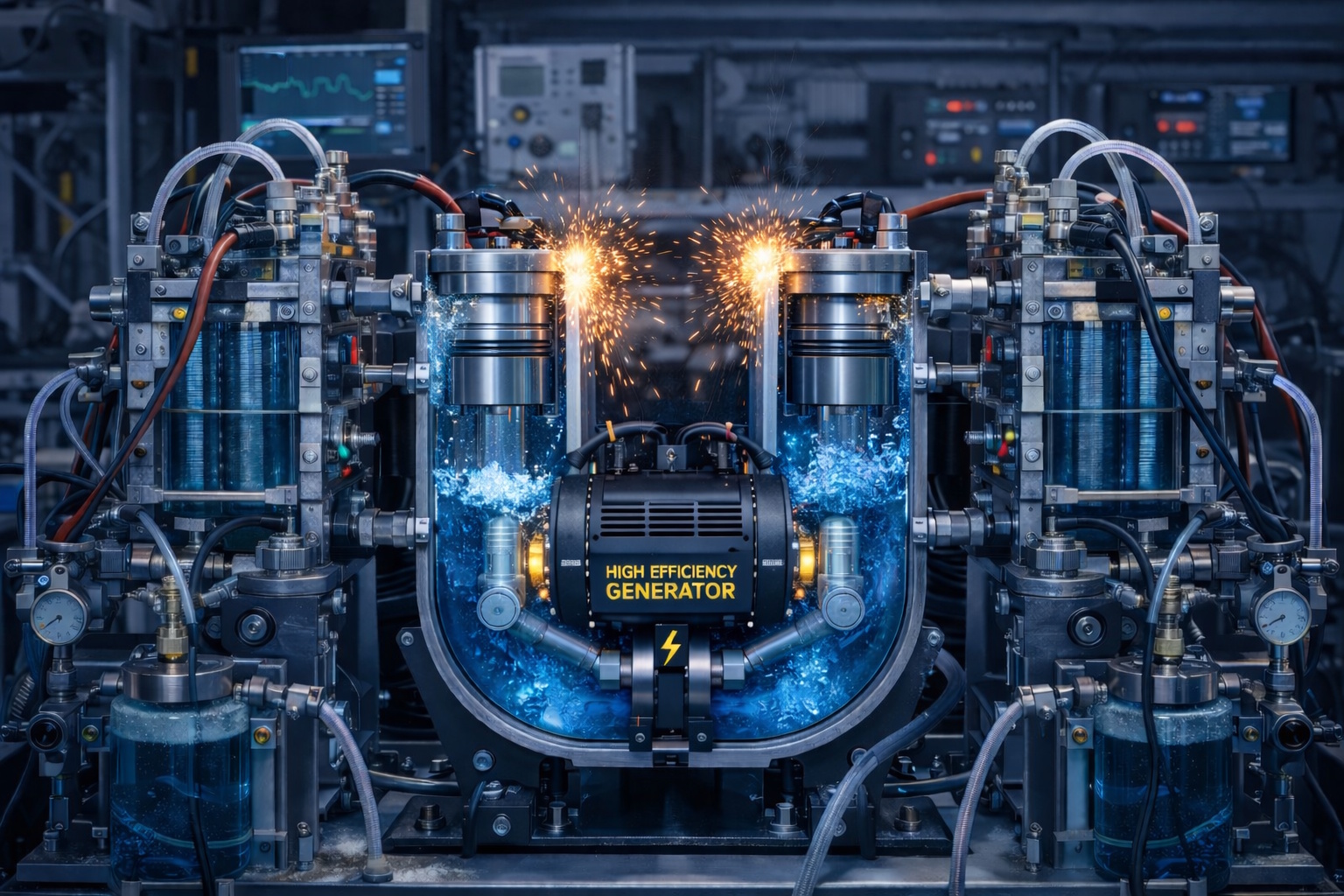
When the E-TEAS® system operates in integration with the L-CPC-TEAS® platform, it forms an advanced technological architecture that transcends the traditional concept of an electrolyzer as a mere gas generator.
The interaction between:
- harmonically modulated electric fields,
- optimized multi-plate geometry,
- structured T.L. (Technical Liquid),
- L-CPC-TEAS® system,
establishes a new paradigm in the management and generation of electric current, where the fluid medium is no longer a mere passive electrolyte but an integral part of the system’s overall electrodynamic behavior.
In this context, controlling the field conditions and the properties of the T.L. enables the exploration of advanced operating configurations focused on efficiency, stability, and industrial scalability.
Key Benefits
Thanks to the combination of multi-plate architecture, harmonic field control, and structured T.L., E-TEAS® offers:
- Greater uniformity of the electrochemical field,
- Optimized management of ionic mobility,
- Reduction of local polarizations,
- Enhanced operational stability,
- Modular and scalable configuration,
- Systemic integration with L-CPC-TEAS® for advanced electricity generation applications.
In summary
E-TEAS® does not alter the fundamental principles of water chemistry but introduces advanced engineering control over self-dissociation phenomena, ionic transport, and electrode reactions through:
- harmonic management of electric fields,
- use of a structured T.L. (Technical Liquid),
- integration with the L-CPC-TEAS® platform.
The result is an advanced technological platform focused on the efficient generation and management of electric energy, with a scientifically coherent and industrially scalable approach.

