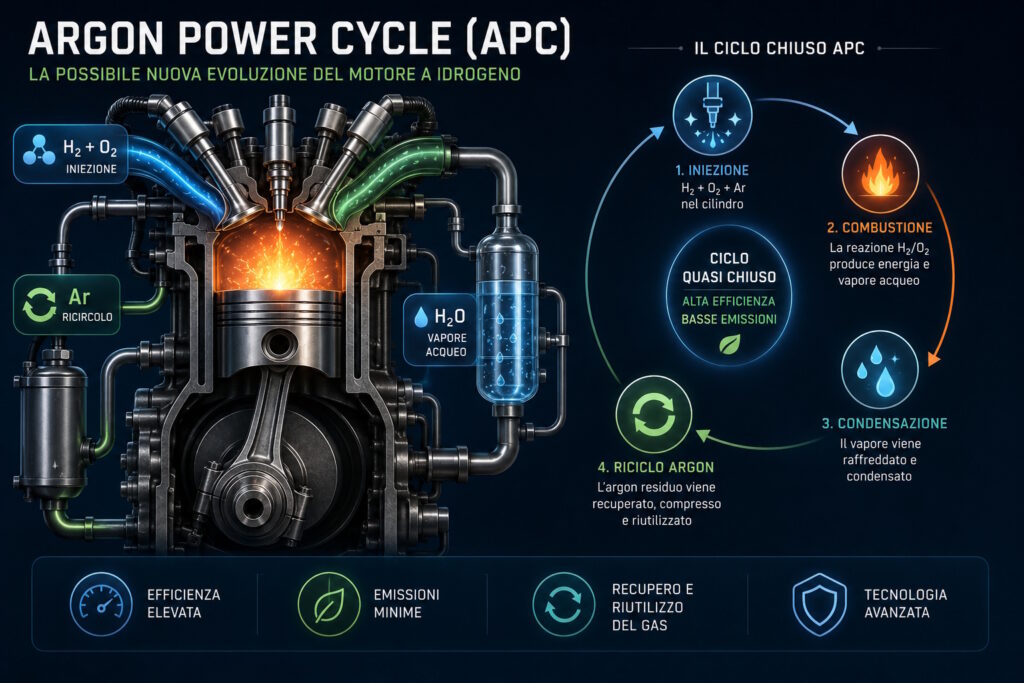
Argon Power Cycle: the possible new evolution of the hydrogen engine.
The possible new evolution of the hydrogen engine. A new generation of hydrogen internal combustion engines could radically change the very concept of internal…

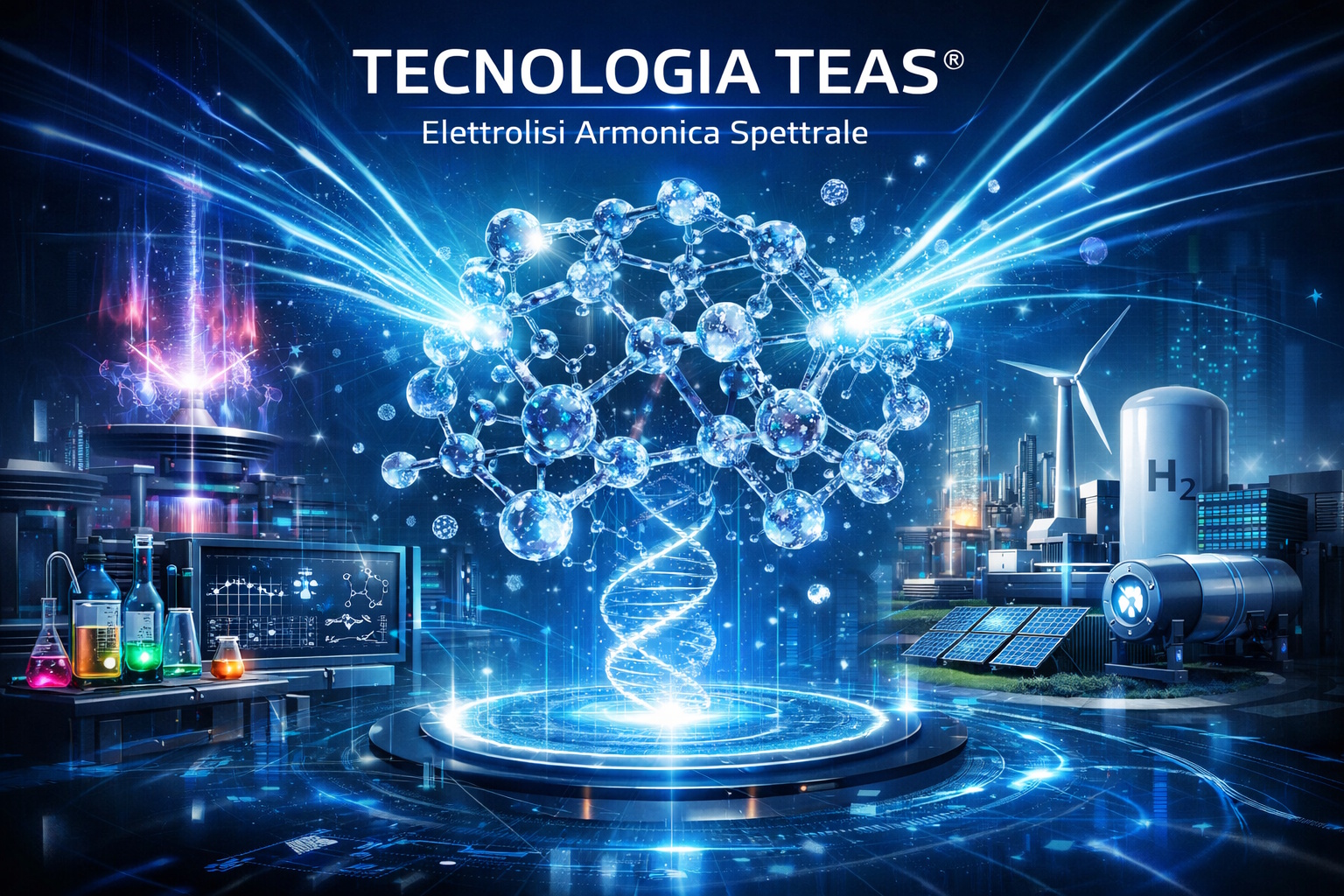
TEAS® Technology (Spectral Harmonic Electrolysis Technology) is an advanced system that uses controlled electric and electromagnetic fields to interact with H₂O molecules, promoting the formation of organized molecular clusters and the production of Technical Liquids (T.L.) intended for industrial and process applications.
TEAS® falls within the field of water activation technologies, combining molecular physics, advanced electrochemistry, and electromagnetic control.
Water is not a passive fluid, but a dynamic molecular system based on a continuously reorganizing hydrogen-bond network.
Numerous scientific studies demonstrate that:
TEAS® technology leverages these principles to modulate the structure of water in a controlled and repeatable manner.
The application of high-intensity electric fields at selected frequencies can influence:
In the TEAS® system, electromagnetic fields do not replace conventional chemistry but act as a tool for molecular control, enabling the attainment of water structural states different from ordinary ones.

TEAS® is not a single chemical reaction, but a technological platform that integrates:
The goal is not to “create new energy,” but to modify the fluid’s behavior to make it functional for specific technological purposes.
TEAS® Technical Liquids are water-derived fluids, characterized by:
These liquids are not chemical additives, but structured waters obtained through controlled physical processes.

TEAS® technology falls within the international research field on the physics of water, which includes:
TEAS® does not rely on unverifiable concepts such as “water memory,” but is based on measurable and reproducible physical phenomena.
It is important to emphasize that:
The technology is under constant development and validation, with the aim of achieving reliable industrial applications.
Spectral Harmonic Electrolysis Technology represents a bridge between scientific research and applied engineering, opening up new possibilities in the molecular control of fluids.
Water, a simple and universal element, thus becomes an advanced technological platform, not just a solvent.

TEAS® technology offers an innovative and scientifically consistent way to interact with water molecules using electric and electromagnetic fields, in order to produce Technical Liquids with specific properties.
It is an approach that requires rigor, measurement, and experimentation, but it opens new perspectives in the field of fluid technologies and advanced processes.



We’re ready to help you. Our expert is here for you: send us a message

