Innovative TEAS® Technologies Supporting Health Security in the Global World of the Third Millennium
In the context of today’s globalized world, health prevention and environmental protection represent one of the major challenges of the third millennium.
The experience gained during recent pandemic emergencies has highlighted how strategic it is to have effective, rapid, and sustainable systems for the decontamination and sterilization of spaces.
The safety of enclosed environments—hospitals, means of transport, public spaces, and industrial sites—is today an essential element in preventing the uncontrolled spread of pathogens and reducing the risk of large-scale contagion.
New Needs, New Technologies
For a long time, traditional chemistry and pharmacology provided an adequate response to the most common health issues.
However, the evolution of biological threats and the increase in urban density have made clear the need for alternative solutions that are more advanced and have a lower environmental impact.
In this scenario, TEAS® technologies (Spectral Harmonic Electrolysis Technology) come into play, making it possible to overcome the limits of conventional systems through controlled physico-electrochemical processes.
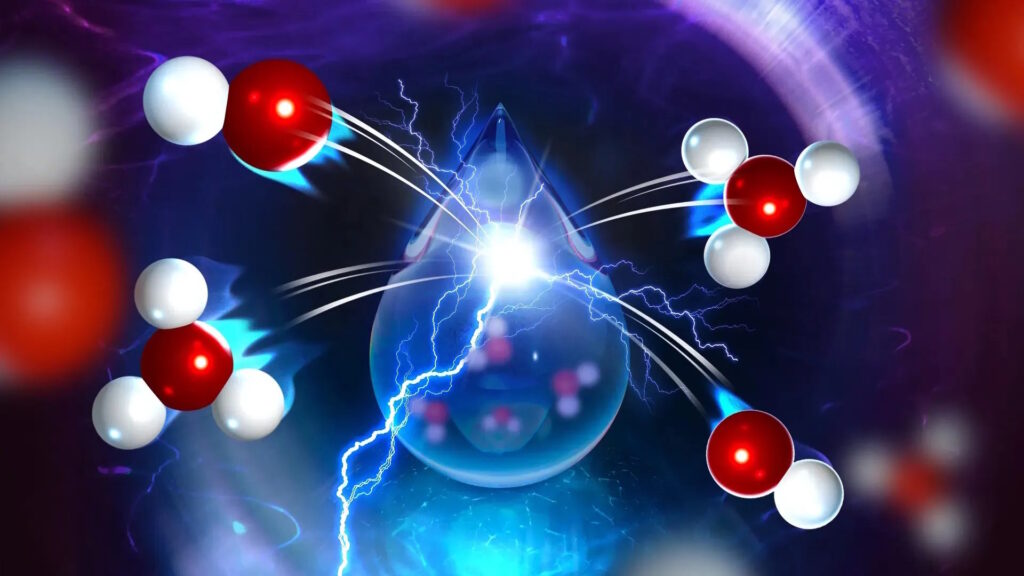
The TEAS process allows pure water to be transformed into functionalized technical liquids, completely free of toxic residues. Through dedicated systems, it is possible to generate substances with anti-pathogenic action starting exclusively from appropriately treated and structured water.
Low-Impact Environmental Sterilization Systems
Technologies based on the TEAS process make it possible to develop fixed or modular sterilization systems designed to be:
- immediately operational (activatable with a simple command),
- safe for operators and occupants,
- free of harmful chemical residues,
- compatible with frequent and continuous use.
These systems can be installed in a variety of settings, including:
- healthcare facilities and hospitals
- public and private buildings
- transport vehicles and airports
- industrial plants and production sites
- warehouses and food supply chains
The result is the creation of sterilized and safe environments, without compromising the cleanliness of the air or the treated surfaces.
Comparison with Traditional Technologies
There are already solutions for chemical-free environmental sterilization, such as ozone, ionization, or the use of UV-C radiation. While effective, these technologies have significant operational limitations and contraindications.
- UV-C: requires high emission power, does not guarantee sterilization in shadowed areas, and poses significant risks to skin and eyes if directly exposed.
- Ozone: a highly oxidizing and aggressive gas, requiring airtight sealing of environments and subsequent ventilation cycles before spaces can be reoccupied.
Triossil: an Advanced Solution
Triossil represents a technologically advanced solution with an extremely low environmental impact. It is an active water vapor, which can be generated either pure or in various concentrations and particle sizes, capable of saturating environments in the form of a fine mist.
Triossil enables effective and uniform sterilization; within a few minutes, the mist naturally settles as water, leaving no harmful residues and without requiring prolonged evacuation of the spaces.
The ability to produce Triossil directly from water, using systems based on TEAS Technology, makes the process economically advantageous, immediate, and easily scalable, allowing rapid interventions wherever needed.
Prospects and Future Developments
The potential of Spectral Harmonic Electrolysis Technology (TEAS) opens up highly promising application scenarios, subject to the necessary testing and approvals from the relevant authorities:
- Respiratory tract disinfection: development of TEAS devices for controlled inhalation, with preventive or therapeutic purposes.
- Potable water treatment: production of sterilizing or pathogen-free water, usable for sanitary services, dishwashing, and laundry, even at low temperatures.
- Domestic applications: compact systems for producing potable water, disinfectant showers and baths, or wellness-supporting water.
These solutions would allow a significant reduction in the use of traditional detergents and chemicals, contributing concretely to ecosystem protection and environmental sustainability.