
Integrated Modular Thermal Technology for Thermo-Active Building Construction
Research and Development Program | TGT R&D
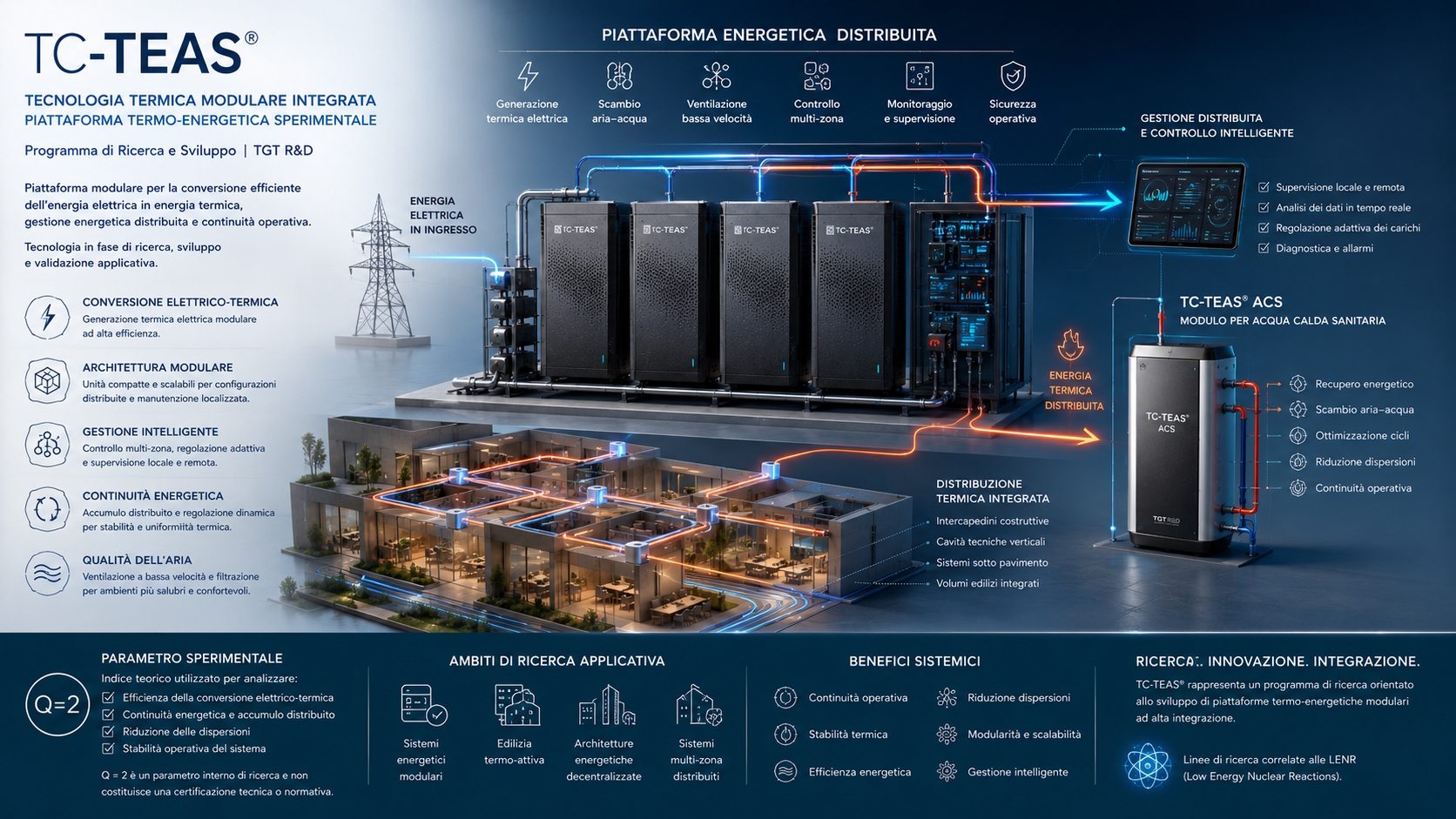
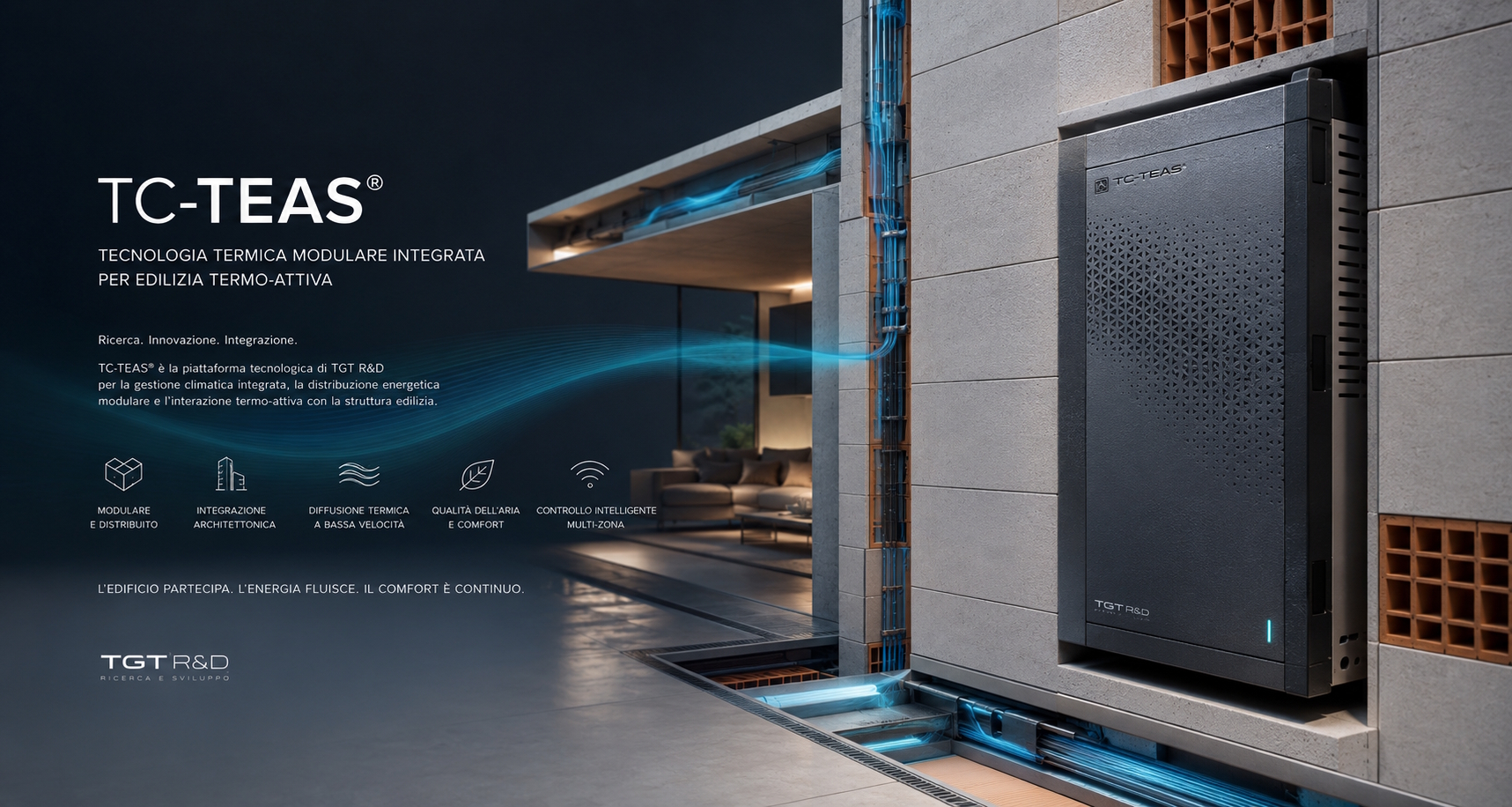
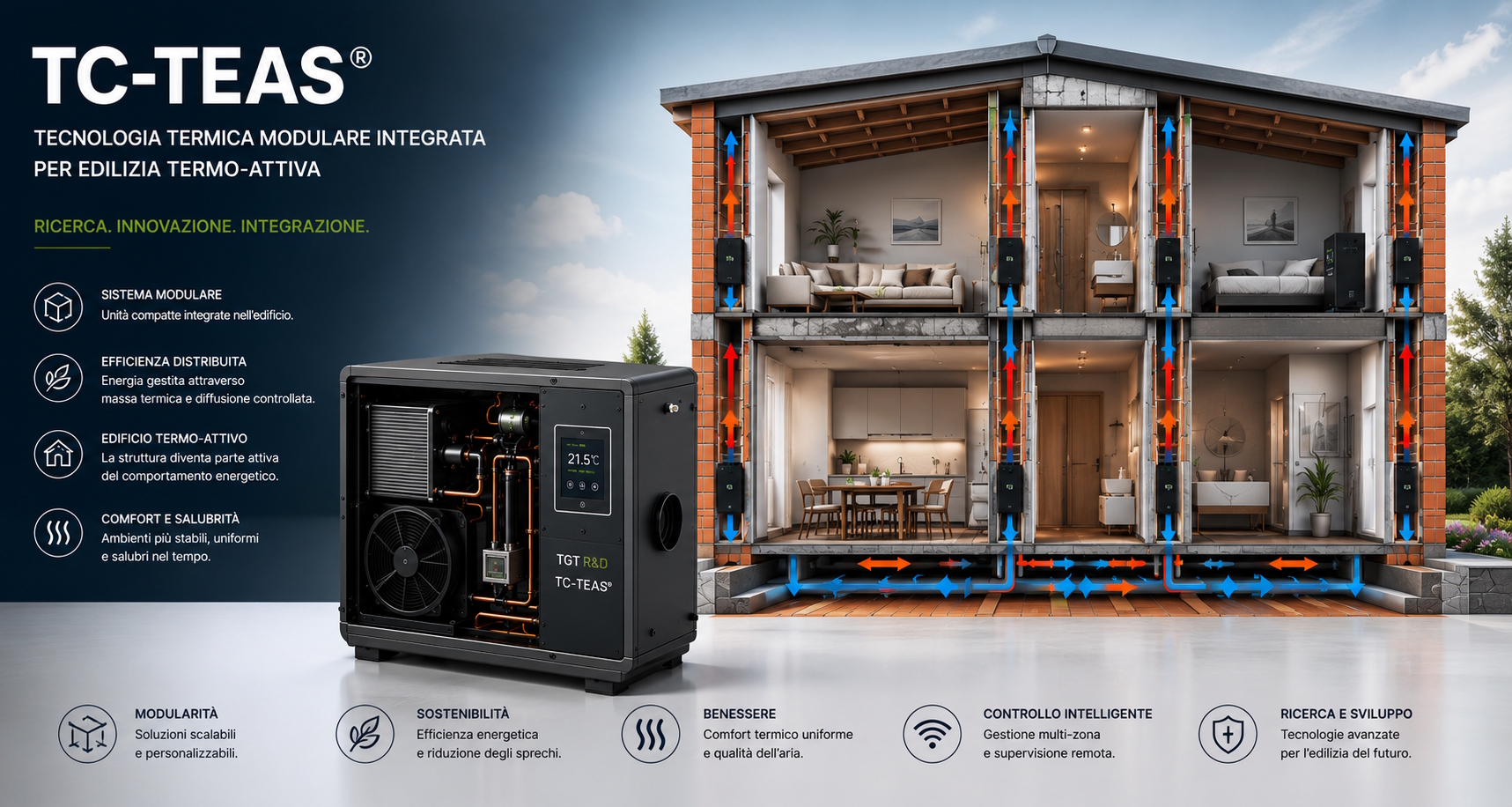
TC-TEAS® is an experimental distributed energy platform currently under research and validation, developed by TGT R&D for the controlled conversion of electrical energy into thermal energy and the integrated management of energy flows in high-inertia thermo-active building systems.
Distributed Energy Platform Architecture
TC-TEAS® operates as a distributed energy platform in which:
electrical thermal generation, air-to-water thermo-fluid exchange, and climate control form a single integrated system.
The system is designed to operate continuously across energy production, regulation, and distribution.
Modular Architecture
The platform consists of integrated modular units that include:
- electrical thermal generation
- air-to-water thermo-fluid exchange
- low-velocity ventilation
- indoor air filtration
- multi-zone control
- monitoring and supervision
- operational safety
The modular architecture enables:
- high scalability
- distributed configuration
- localized maintenance
- installation flexibility
Integrated Energy Distribution
The system uses a structural energy distribution based on:
- construction cavities
- vertical technical cavities
- underfloor systems
- integrated building volumes
This architecture promotes direct interaction between the energy platform and the building mass.
Operational Principle
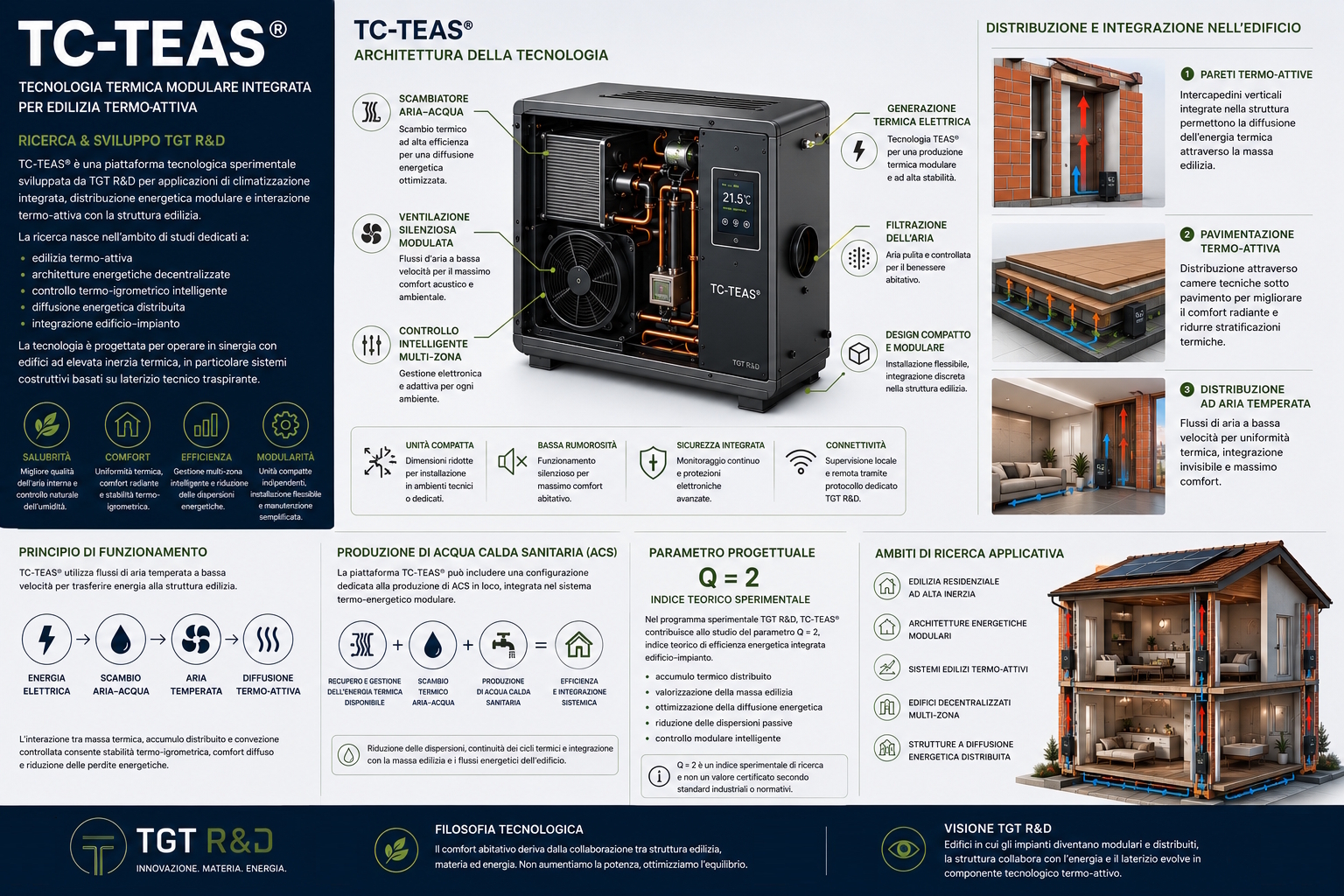
TC-TEAS® uses tempered low-velocity air and thermo-fluid exchange for the controlled management of thermal energy.
The system behavior is based on:
- distributed thermal storage
- dynamic regulation of energy flows
- stabilization of thermal cycles
- continuous operation
Modular Architecture
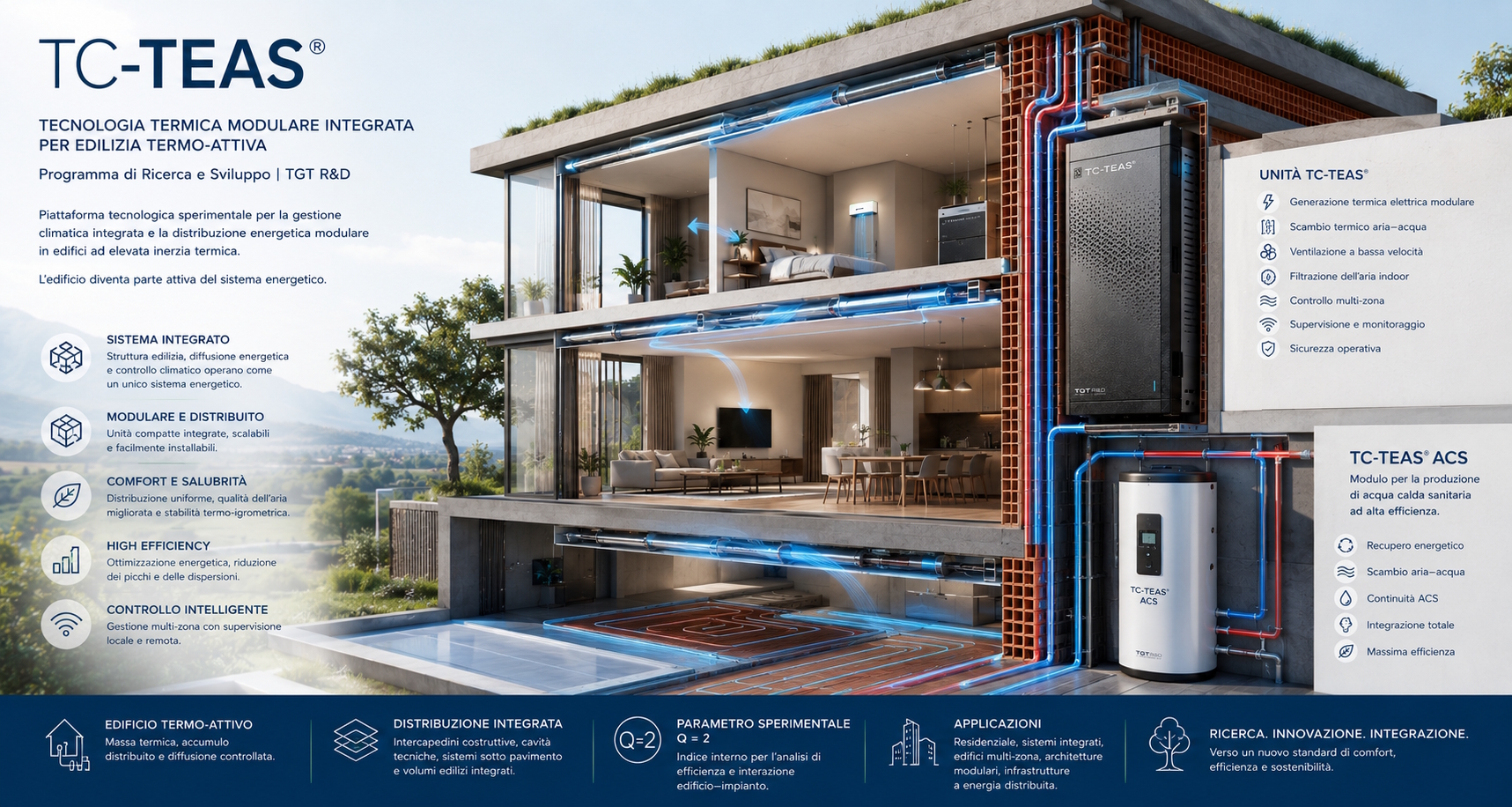
The platform consists of integrated modular units that include:
- electrical thermal generation
- air-to-water thermo-fluid exchange
- low-velocity ventilation
- indoor air filtration
- multi-zone control
- monitoring and supervision
- operational safety
The modular architecture enables:
- high scalability
- distributed configuration
- localized maintenance
- installation flexibility
Integrated Energy Distribution
The system uses a structural energy distribution based on:
- construction cavities
- vertical technical cavities
- underfloor systems
- integrated building volumes
This architecture promotes direct interaction between the energy platform and the building mass.
Operational Principle
TC-TEAS® uses tempered low-velocity air and thermo-fluid exchange for the controlled management of thermal energy.
The system behavior is based on:
- distributed thermal storage
- dynamic regulation of energy flows
- stabilization of thermal cycles
- continuous operation
Multi-zone Energy Management
Each unit operates as an autonomous energy node with:
- adaptive control
- independent regulation
- distributed supervision
The modular model promotes:
- system scalability
- configurational modularity
- reduction of centralized infrastructure
TC-TEAS® DHW (Domestic Hot Water)
Integrated module for domestic hot water (DHW) production, designed as a subsystem of the distributed energy platform.
Based on:
- energy recovery
- air-to-water thermo-fluid exchange
- optimization of thermal cycles
The DHW architecture is designed to ensure:
- continuous operation
- thermal stability
- reduction of energy losses
- integration into the overall energy system
Control and Supervision
TC-TEAS® integrates electronic systems dedicated to:
- multi-zone regulation
- continuous monitoring
- adaptive management of thermal loads
- local and remote supervision
Experimental parameter Q = 2
Internal research index used to analyze:
- electro-thermal efficiency
- energy continuity of the platform
- distributed thermal storage
- reduction of losses
- operational stability of the system
Q = 2 is an internal experimental parameter and is not certified.
Research areas
- distributed energy platforms
- integrated thermo-active systems
- modular energy architectures
- multi-zone infrastructures
- decentralized energy systems
Research note
TC-TEAS® is an experimental platform currently under development and application validation.
The activities include advanced research lines on distributed energy systems and high-integration thermal-energy technologies.

